Je Yo Te Fikse Sou Bondye study guide

Je Yo Te Fikse Sou Bondye Study Guide

  • Post category:Free

This Haitian Creole study guide is designed to help you understand and enjoy Je Yo Te Fikse Sou Bondye. Organized by chapter, it provides definitions, explanations, and context for important words and expressions encountered throughout the novel.

Whether you’re learning Haitian Creole or studying the book in a class, this guide will help you build vocabulary and improve reading comprehension as you progress through the story.

Je Yo Te Fikse Sou Bondye by Zermatt Scutt is the Haitian Creole translation of the novel Their Eyes Were Watching God by Zora Neale Hurston.

If there’s a word or phrase you’d like to see included or explained, feel free to contact us.

Why we choose Je Yo Te Fikse Sou Bondye

If you’re looking for an outstanding book in Haitian Creole, we highly recommend Je Yo Te Fikse Sou Bondye.

We absolutely love this translation. It’s rich with idioms, vivid imagery, and natural, expressive language that truly captures the Haitian spirit. Beyond being a pleasure to read, it offers a fascinating glimpse into how Haitians think, express themselves, and what matters to us when we speak. Rather than translating every sentence word for word, it beautifully preserves the imagery and meaning of the original book, making the Haitian Creole feel authentic and alive.

We’re also hoping to interview Zermatt Scutt to learn more about the creative process behind translating this literary masterpiece. If that happens, we’ll be sure to share it with you!

Important links

Ask Us to Explain a Word

Buy “Je Yo Te Fikse Sou Bondye”

Buy “Their Eyes Were Watching God”

Click “Back to Section List” to return to the Section List, or “Back to Top” to jump to the top of the section you’re currently reading.

Section list

Character names in English and Haitian Creole

Jàn
Janie Crawford
Moun ki pi enpòtan nan istwa a 
Logann Lamètim
Logan Killicks
Premye mari Jàn
Jo Estak (Jodi)
Joe “Jody” Starks
Dezyèm mari Jàn, majistra Eatonville
Dous Makòs
Tea Cake (Vergible Woods)
Twazyèm mari Jàn
Nanni
Nanny
Granmè Jàn
Fibi Watsonn
Pheoby Watson
Bon zanmi Jàn
Madan Selesten
Mrs. Sumpkins
Li rete nan zòn nan
Djonni Taylè
Johnny Taylor
Yon jèn gason
Penina Simon
Mrs. Tony Robbins / Penina
Li rete nan zòn nan
Sam Watsonn
Sam Watson
Mari Fibi

Haitian Creole glossary

ala de koze

ENGLISH: what a fuss!; such a…; what a load of…; goodness!

MEANING & USAGE
Not found in the English translation. Used to comment on excessive talk or attention surrounding a person or situation. Here, it reinforces the effect of Hurston’s rapid series of hyphenated questions, highlighting the townspeople’s nonstop gossip and speculation about Janie’s return.
FROM THE TEXT
1. Kote pil lajan mari l te fin mouri kite pou li a? Ala de koze papa!
Where all dat money her husband took and died and left her?—

bay vag

ENGLISH: to give up, quit, stop caring, or resign oneself to a situation

MEANING & USAGE
In this passage, men watch their dreams from a distance until they are forced to turn away and accept that those dreams may never come true. The expression conveys resignation and disappointment in the face of life’s realities. It introduces one of the novel’s central themes: the gap between what people hope for and what they ultimately experience.
FROM THE TEXT
1.konsa, nèg yo gade, yo gade bato yo ki byen lwen jouk yo menm yo sètoblije vire do yo, yo bay vag. Se konsa lavi nèg dewoule.
…until the Watcher turns his eyes away in resignation, his dreams mocked to death by Time. That is the life of men.

chape poul

ENGLISH: to clear out, leave, run away, take off, escape

MEANING & USAGE
This expression is usually followed by a pronoun (mwen, ou, li, nou, yo).
FROM THE TEXT
1. Mwen garanti w ti bway la chape poul li ak yon ti fiyèt ki poko menm fè pwèl–se sa menm ki pou rive lè yon fanm tankou manmzèl pa konn kijan pou l kenbe pwotokòl li.
Betcha he off wid some gal so young she ain’t even got no hairs—why she don’t stay in her class?—”
 
2. Lè ti bourik la te rive bò magazen an, Lonm te teke l. Bèt la te leve tèt li, li te lage zorèy li pa dèyè, epi l te fonse pou l atake. Lonm te oblije kouri chape poul li.
When the mule was in front of the store, Lum went out and tackled him. The brute jerked up his head, laid back his ears and rushed to the attack. Lum had to run for safety.
 
3. Tanzantan, li te imajine yon ti wout sou chimen an pandan solèy la t ap leve, epi li te fè lide chape poul li. Ale ki kote? Ale jwenn kisa?
Now and again she thought of a country road at sun-up and considered flight. To where? To what?

fè wout

ENGLISH: to leave, go on one’s way

MEANING & USAGE
This expression does not have a single fixed English equivalent. Its meaning is determined largely by what follows wout and by the surrounding context.
  • fè wout la ak = to go along with, accompany
  • fè yon wout = to go out, go somewhere special
  • fè wout [chemen] kwochi [detounen] = to kidnap; to take a shortcut; to misappropriate or use funds dishonestly; to play hooky
  • al fè wout ou = Get out of here!
FROM THE TEXT
1. Men kounye a, nan moman sila a, ni solèy la, ni patwon an t al fè wout yo.
But now, the sun and the bossman were gone…
 
2. Li te foure tout men l anndan m, li te rale gwo zòtèy mwen jan l te gen abitid fè, epi li te kouri al fè wout li pi vit pase zeklè.
He sorta wropped his hand in it, pulled mah big toe, lak he always done, and was gone after de rest lak lightnin’.
 
3. Mwen sipoze mwen pran anpil tan pou m al fè wout mwen, men mwen te sispèk ou te ka bezwen kout men pou w fèmen magazen an.
Ah reckon Ah done overlayed mah leavin’ time, but Ah figgured you needed somebody tuh help yuh shut up de place.

kase tout kòd

ENGLISH: to break all ropes. This expression is not idiomatic.

MEANING & USAGE

This phrase appears only in the author’s introductory poem, Imajine Zora.

  • kase kòd = to try hard; to die
  • kase tèt [kòd] li = to try very hard, to go to great lengths, to break one’s neck trying
FROM THE TEXT
1. Lè m imajine Zora m imajine ti kabrit ti kabrit dezòd k ap kase tout kòd
When I think of Zora, I imagine a little mischievous goat breaking free from the ropes holding her

kenbe pwotokòl

ENGLISH: to keep a certain dignity

MEANING & USAGE
The expression underscores the novel’s focus on social status and respectability. In both examples, the language reveals how strongly the community judges people according to social standing and perceived suitability.
FROM THE TEXT
1. Mwen garanti w ti bway la chape poul li ak yon ti fiyèt ki poko menm fè pwèl–se sa menm ki pou rive lè yon fanm tankou manmzèl pa konn kijan pou l kenbe pwotokòl li.
Betcha he off wid some gal so young she ain’t even got no hairs—why she don’t stay in her class?—”
 
2. Epi, mari m deja di m pa gen okenn dyab ki kenbe pwotokòl li k ap pèdi tan l betize avè m.
Anyhow mah husband tell me say no first class booger would have me.

kè kontan

ENGLISH: happy,  joyful

MEANING & USAGE
A compound noun/adjective meaning happiness or joy. Literally, “happy heart”. Used as both a noun (kè kontan mwen genyen an = “the joy”) and an adjective (li gen kè kontan = “she’s happy”). Central to Janie’s journey—she returns home having found it.
FROM THE TEXT
1. Se sèl rezon sa a ki fè w wè m tounen bò isit la–paske m pa gen anyen kote m te ye jouk nan pwent Florida a ki pou ban m kè kontan ankò.
And dat’s de only reason you see me back here—cause Ah ain’t got nothing to make me happy no more where Ah was at. Down in the Everglades there, down on the muck.
 
2. Li gen yon jan li kapab pran nenpòt ti bagay epi l transfòme l pou l kreye kè kontan lè gen annwi. Epi, nou viv sou ti sous kè kontan sa a jouk nou jwenn yon lòt sous kè kontan.
He kin take most any lil thing and make summertime out of it when times is dull. Then we lives offa dat happiness he made till some mo’ happiness come along.

lage kò

ENGLISH: to lie down; to devote oneself to, let oneself go into, launch into

MEANING & USAGE
This expression is usually followed by a pronoun + preposition.
FROM THE TEXT
1. …li te gentan blayi kò l sou misye oubyen lage kò l atè pou misye te ka ede l leve.
…he’d fall against him or fall on the ground and have to be picked up.
 
2. Epi yon lòt bagay, Jàn pa t panse Dous Makòs te debwouye l ase vit pou l te fè manmzèl konprann li se yon nonm marye jan misye te sipoze fè … Petèt yon jou Dous Makòs va lage kò l bay manmzèl.
Tea Cake didn’t seem to be able to fend her off as promptly as Janie thought he ought to … Maybe some day Tea Cake would weaken.
 
3. Jàn te byen renmen jan moun yo te gen abitid chita sou galri a pou yo te lage kò yo nan blage ak diskite.
When the people sat around on the porch and passed around the pictures of their thoughts for the others to look at and see, it was nice.

mawonnen

ENGLISH: to tie; to attach; to tangle up or become entangled; to coil

OTHER USES
  • mawonnen = to be fussy
  • mawonnen kò = to look uncomfortable, be socially shy
FROM THE TEXT
1. Ret tann, kote l kite jenn ti gason ki te mawonnen avè l lè li t aprale a? Te kwè se marye yo t al marye?
Where she left dat young lad of a boy she went off here wid?—Thought she was going to marry?
 
2. Anplis, yo te remake jan van an te mawonnen ak cheve l pou voye l ale epi mennen l vini tankou yon kap sou do manmzèl.
…the great rope of black hair swinging to her waist and unraveling in the wind like a plume…
 
3. Nan fènwa tou nwa a, mwen te mawonnen bebe m lan pi bon jan m te kapab epi m te chape pou l mwen jouk mwen te rive bò rivyè a. 
In de black dark Ah wrapped mah baby de best Ah knowed how and made it to de swamp by de river.

pran san

ENGLISH: to be careful or methodical; to take it easy, keep calm, or calm down.

MEANING & USAGE
In this context, the phrase is usually followed by a pronoun (mwen, ou, li, nou, or yo). In other contexts, it can also mean “to receive a blood transfusion” (Pasyan an ap pran san) or “to draw blood for testing” (Nès la ap pran san pou analiz la).
FROM THE TEXT
1. Nèg yo te pran san yo pou yo fikse atansyon yo sou dèyè l…
The men noticed her firm buttocks…
 
2. Ret tann demen, m ap pran san m pou m prepare yon bon pla pou selebre retou w.
But Ah’m liable to have something sho nuff good tomorrow, ’cause you done come.
 
3. A, sa a pa anyen pou m ba w manje, Jàn. Ret tann demen, m ap pran san m pou m prepare yon bon pla pou selebre retou w.
Aw, dat ain’t much to eat, Janie. But Ah’m liable to have something sho nuff good tomorrow, ’cause you done come.

tandiske

ENGLISH: while, whereas

MEANING & USAGE

A conjuction. Also pronounced tandike. As you’ll see in the examples below, if you’re translating directly from English into Haitian Creole, you may forget to use tandiske. Remember that it’s used to contrasting phrases or clauses within the same sentence.

FROM THE TEXT
1. Nou pa wè jan l pran pòz chita byen wo sou cha li tandiske l ap trennen nan tout fatra k atè a.
She sits high, but she looks low.
 
2. “Paske w kouri leve pou w fè diskou tandiske ou pa menm konn kijan pou w fè sa,” Lij te reponn.
“Cause you jump up tuh make speeches and don’t know how,” Lige said.
 
3. Petèt te gen plis bagay nan mond lan, petèt se pa t po krache sèlman zòt te sere pou jwisans yo sèlman, tandiske yo menm yo te fè yo konprann sa pa t anyen pou yo krache nan yon bwat pat tomat.
Maybe more things in the world besides spitting pots had been hid from them, when they wasn’t told no better than to spit in tomato cans.

taye banda

ENGLISH: to boast, show off, strut around, or put on airs

MEANING & USAGE
One of the novel’s most powerful expressions. Literally, it describes someone showing off or carrying themselves with exaggerated confidence. Figuratively, it symbolizes living freely, confidently, and without regard for the expectations of others. It is Hurston’s signature image for Jàn’s philosophy of self-determination.
 
The expression is found in the Entwodiksyon, chap.2, and Konklizyon.
 
Similar expressions include fè chèlbè, fè bobis, and bay payèt.
FROM THE TEXT
1. Epi ak bèl wòb sila a li pa t ap fè ni en, ni de, ni twa, li t ap sèlman fè sa l te fè tout lavi l: taye banda sou chimen li menm menm trase pou pwòp tèt li.
 
2. Se te yon bèl jounen nan lwès Florida jou apremidi sa a. Se te sezon prentan, lè laniti [lanati] met kò l deyò pou l taye banda.
It was a spring afternoon in West Florida. Janie had spent most of the day under a blossoming pear tree in the back-yard.
 
3. Eksperyans Jàn pandan devlopman relasyon sila a demontre se nan lakou
libète bon jan moun li ye a vin alèz pou l met tèt li deyò nèt ale, pou l pran taye banda.

vag lang yo

ENGLISH: waves of their tongue. This expression is not idiomatic.

OTHER USES
  • bay vag = to give up, quit
  • bay yon moun vag = to ignore someone; to avoid meeting with someone
FROM THE TEXT
1. Yo te vwayaje travèse konbyen nasyon sou vag lang yo
For some they come in with the They passed nations through their mouths.

vèvè

ENGLISH: ritually traced design on the ground of a Vodou temple used to invoke a specific spirit. It symbolizes a spirit.

MEANING & USAGE
In Haitian Vodou, a vèvè is a ritual design used to invoke a specific spirit. Each spirit has its own unique design. The author uses vèvè as a metaphor for a pattern or design laid out by a dream. Just as a vèvè guides a ritual toward a particular spirit, the dream provides a pattern that shapes the women’s actions.
FROM THE TEXT
1. Men kanta pou fanm, se yon lòt koze. Fanm bliye tout sa yo pa enterese sonje, epi yo sonje tout sa yo pa vle bliye. Pou yo, se rèv la menm ki reyalite a. Epi, selon jan vèvè rèv la trase, yo pran viv, yo pran aji, yo pran debwouye yo.
Now, women forget all those things they don’t want to remember, and remember everything they don’t want to forget. The dream is the truth. Then they act and do things accordingly.

voye je

ENGLISH: to glance, look around, look at

MEANING & USAGE
Another similar expression is voye je sou. It means “to keep an eye on”, “to look after”, or “to watch”.
FROM THE TEXT
1. Li te kouri leve sou kabann lan epi li te voye je l nan fenèt la.
She bolted upright and peered out of the window…
 
2. Jàn, m ap chache yon moun pou ede w nan magazen an epi ou menm ou kapab voye je sou bagay yo pandan mwen menm m ap travay sou lòt antrepriz.
Janie, Ah’ll git hold uh somebody tuh help out in de store and you kin look after things whilst Ah drum up things otherwise.

Upgrade to a paid subscription to unlock the full Je Yo te Fikse Sou Bondye Study Guide.

Upgrade to a paid subscription to unlock the full Je Yo te Fikse Sou Bondye Study Guide.

Upgrade to a paid subscription to unlock the full Je Yo te Fikse Sou Bondye Study Guide.

Comprehension questions

** The questions below contain spoilers.

1. Examine Hurston’s use of point of view. How does the way she structures the novel with the narrative frame of Jàn telling her story to Fibi impact the reader’s experience and help develop theme? How would the effect of the novel be different if it were written from a first-person point of view?

2. The novel’s title is taken from a line describing the hurricane that hits Belle Glade: “Yo te chita ansanm ak lòt moun yo ki te nan ti kay pa yo, je yo t ap gade mi yo, epi nanm yo t ap mande èske Misye te soti pou l mezire ti jefò yo ak gwo fòs ponyèt li. Yo tout te sanble yo t ap gade fènwa a, men alaverite je yo te fikse sou Bondye.” (Chapter 18, page 237). How does Hurston develop the idea of God? What role does God play in the world of the novel?

3. One of the universal themes of literature is the idea that children suffer because of the mistakes of an earlier generation. Examine the development of this theme in Je Yo Te Fikse Sou Bondye by analyzing the story that Nanni tells about her life (Chapter 2). Discuss Nanni’s interactions with white men and women. How did growing up in slavery impact her worldview? How has her past impacted her relationship with her daughter and granddaughter?

4. Consider Jàn’s description of the day she realized she was not white (Chapter 2). What does Jàn become aware of when she sees the photograph? How does this moment change her understanding of herself and her place in the world? What does this scene suggest about racial identity and how it is shaped by society rather than by appearance alone?

5. Two of the interconnected themes in the novel are the search for identity and the individual in opposition to society. Use the following quote as a starting point for the exploration of these themes: “Epi yon jou, li te chita epi li te fè vizyon lonbray li ki t ap ale vini nan magazen an, ki t ap koube devan Jodi, pandan li menm, sa li ye tout bon an, te chita anba lonbraj yon pyebwa, epi van an t ap soufle sou cheve l ak rad li.” Throughout the novel, what causes Jàn to separate her exterior life from her interior life? How does she reconcile this conflict?

6. Examine Jàn’s response to Jodi’s death. What does her reaction reveal about women’s lives in the late 19th and early 20th centuries? How does Jodi’s death change Jàn’s understanding of freedom and independence?

7. On page 24, Jàn says, “Yo te konn rele m Alfabè paske pandan m t ap grandi te gen yon pakèt moun ki te soti pou ban m non pa yo.” Examine the use of names in the novel. What do the character’s names reveal about identity? How do names reflect a character’s culture, socioeconomic position, and/or personality? Pay particular attention to characters that are called more than one name throughout the novel. 

8. On page 67, Lik Kòkè observes, “Nou menm moun nwa gen twòp jalouzi kont youn lòt. Se sa k fè nou pa rive pi lwen. N ap pale sou moun blan yo k ap peze kou nou. Yo pa menm bezwen fè sa. Nou menm menm ap peze kou youn lòt.” Throughout the novel, how does envy impact Jàn’s life?

9. Hurston makes the following observation on page 84: “Jàn te byen renmen jan moun yo te gen abitid chita sou galri a pou yo te lage kò yo nan blage ak diskite. Se te konsa, ak lodyans, yo te pran fè foto s ak nan lide yo epi pase l bay youn lòt gade. Si yon moun te pran gade foto sa yo, li t ap wè se te lavi a menm yo t ap desine, kolore epi agrandi byen laj nan imajinasyon yo. Sa te rann li enteresan anpil pou w chita koute istwa yo.” As a folklorist and anthropologist, Hurston was interested in storytelling and oral tradition. Examine the role that storytelling plays in her novel. 

10. After Nanni tells Jàn about her life, she concludes with a deeply resonant statement: “Kite m al rankontre Mèt mwen anpè, Jàn. Mwen se yon asyèt ki deja krake.” This metaphor reinforces the story that Nanni has told and provides further insight into her character. Using Hurston’s text as your guide, compose a short narrative account of your own life story, focusing on two or three events that have been the most significant. Conclude your narrative with a metaphor that summarizes your story.

11. On page 122 Hurston describes Jàn’s isolation and comments, “Jàn pa t gen abitid li liv, kidonk li pa t konnen li se lemond antye ak syèl la ki mawonnen ansanm epi ki vin tounen yon ti gout dlo.” Compose a personal narrative that explores a time reading a book that helped you see yourself more clearly. What was it about the book that made you feel connected? What insights have you had about yourself as a result of reading literature?

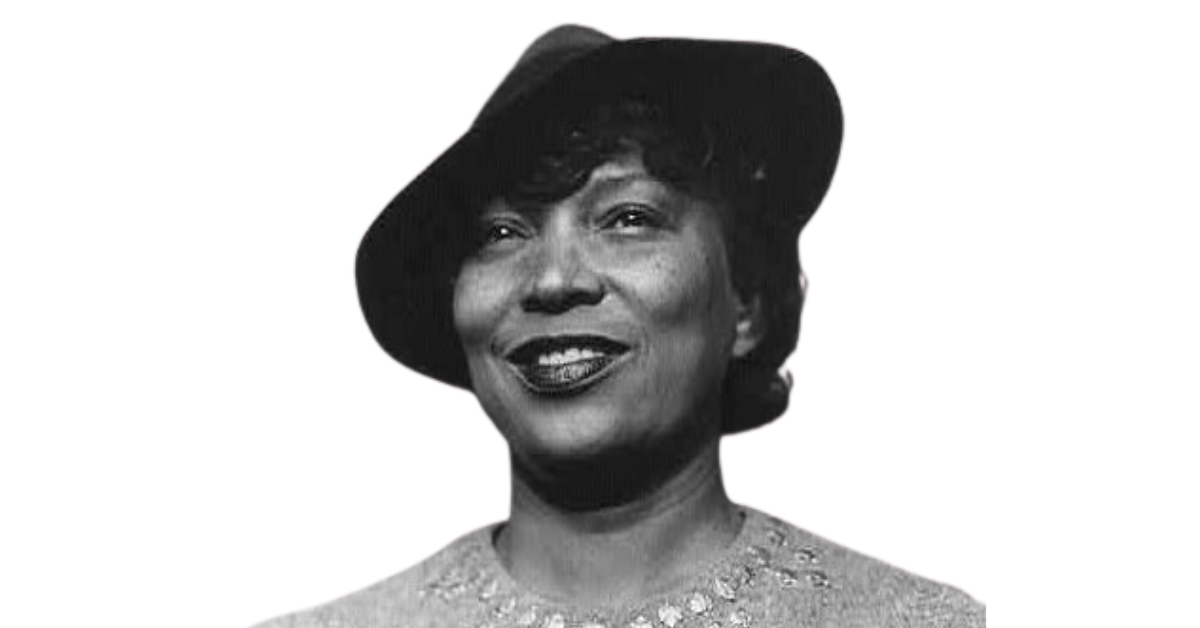
Cover Image: https://commons.wikimedia.org/wiki/File:Hurston-Zora-Neale-LOC.jpg

Source for original English translation: https://www.kingphilip.org/wp-content/uploads/2022/06/TEWWG.pdf

Reference for questions: https://files.harpercollins.com/HarperAcademic/TheirEyesCommonCore.pdf#page=3.48