If you’ve been learning Haitian Creole for any amount of time, you’ve definitely come across the word “pa.” Most learners know it as the word used for negation—like “not” in English. But what if I told you “pa” can also be used to express possession, closeness, and emotional emphasis?
In this post, we’ll explore how this small word does some big communicative work in Kreyòl—and how you can use it more naturally in real-life conversations.
“Pa” Means More Than Just “Not”
You can use “pa” when you want to place greater emphasis on your degree of closeness to someone or on the fact that something truly belongs to you. No, there isn’t a neat and tidy translation for this concept. As with many other fun word choices in Kreyòl, it’s all about your intended message. What do you want the person you’re speaking with to focus on?
Here are some examples:
Clarifying Possession
A: Ala yon bèl plat manje! Ban m pran yon ti bagay. (Li lonje men li.)
What a delicious looking plate of food! Let me get a little bit. (They reach out their hand.)
B: (Li tape men li) Sa se plat pa m! Kote manje pa w?
(They smack their hand) This is my plate! Where’s your food?

Emphasizing Closeness with Someone
A: Padon, ou pa ka antre la.
Sorry, you can’t enter here.
B: Non, kite l pase. Sa se moun pa m. Nou zanmi lontan.
No, let him through. That’s my buddy. We’ve been friends for a long time.
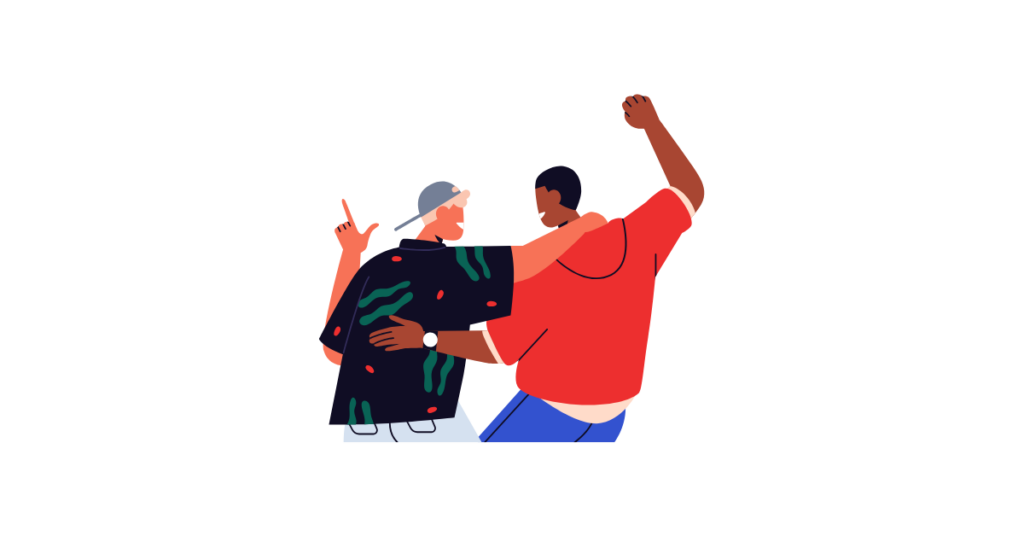
Emphasis on the fact that something is your very own
Mande m sa, e m ap ba w nasyon yo kòm eritaj pa w. M ap ba w tout tè a kòm byen pa w.
Ask of me, and I will give nations as your inheritance and the ends of the earth as your possession.
The context here is owning something that is rightfully yours; inheritance. This requires a stronger word choice like “pa”. Just saying “m ap ba w tout tè a kòm byen ou” doesn’t give the same sense of reassurance.
"Pa" and the Definite Article
In everyday conversation, “pa” is often paired with a definite article to add even more emphasis. Let’s take a look at the first example again with the addition of the definite article:
Sa se plat pa m nan! Kote manje pa w la?
This is my plate! Where’s your food?
As you can see, the translation doesn’t change. In English you would likely adjust your tone and pitch to give greater emphasis. You can get a better understanding of the definite article here.
The example above is one of the most common sentence structures using “pa” for possession. (Pa + pronoun + definite article) Pronouns can be used interchangeably.
Pa mwen an ==> Pa m nan
Pa ou a ==> Pa w la
Pa li a ==> Pa l la
Pa nou an
Pa yo a
Using "Pa m nan" in Everyday Haitian Creole
If you were to search ‘pa m nan’ on Youtube, many videos featuring God would likely pop up. Specifically; “Bondye pa m nan”. You will hear this often when people are expressing faith in their own God. For example:
Bondye pa m nan pi fò.
My God is stronger.
Another common way ‘pa m nan’ is used is when talking of romantic relationships. People will call their significant other “ti pa m nan” in an endearing way. When people want to say that they’ve found their person (significant other) they say; “mwen jwenn moun pa m nan”. This is different from saying “sa se moun pa m” mentioned above.

Mwen jwenn moun pa m nan.
Ti Pa M Nan
Now that you’ve seen this other side of “pa”, keep looking for more examples in the wild! Start with this song below. How would you explain the way they are using ‘pa’ here?
Are you ready to level up from just learning about Haitian Creole to actually speaking it? Take one on one lessons with us! You’ll get personalized lessons that will help you reach your goals! Book a trial lesson to get started.