How many times a day do you use am, are, or is? Using the verb “to be” is second nature in English. However, many learners—even intermediate ones—struggle to know how and when to use “se” correctly in Haitian Creole. How about you?
In this lesson, we’ll review how the verb “to be” works in Haitian Creole, 11 important rules for using “se”, and what the difference is between “se” and “ye”. We’ll also cover common mistakes to avoid, plus useful phrases and proverbs that use “se.”
This is your complete guide to using “se” in Haitian Creole—a deeper dive into our earlier lesson, How to Use “Se” Correctly.
What is the verb "to be" in Haitian Creole?
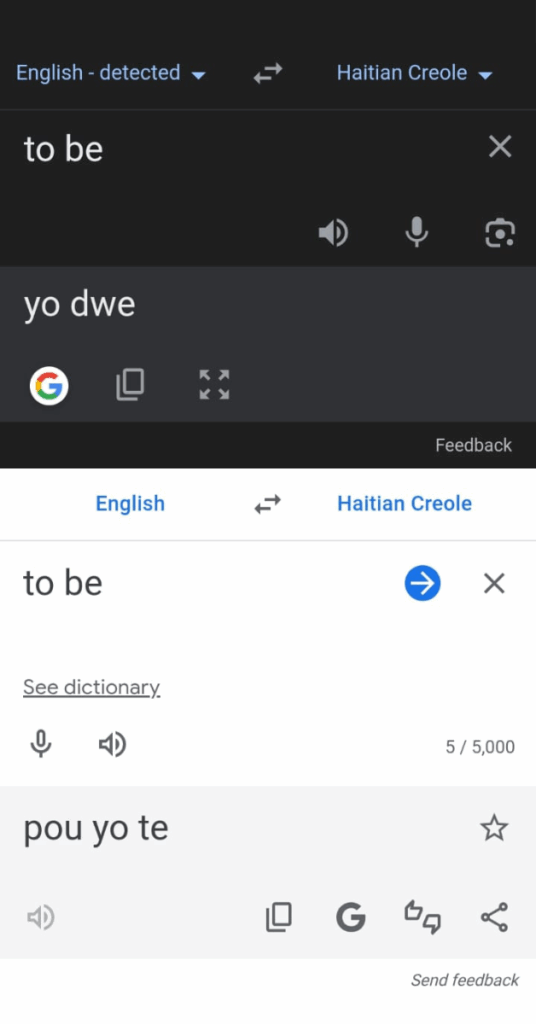
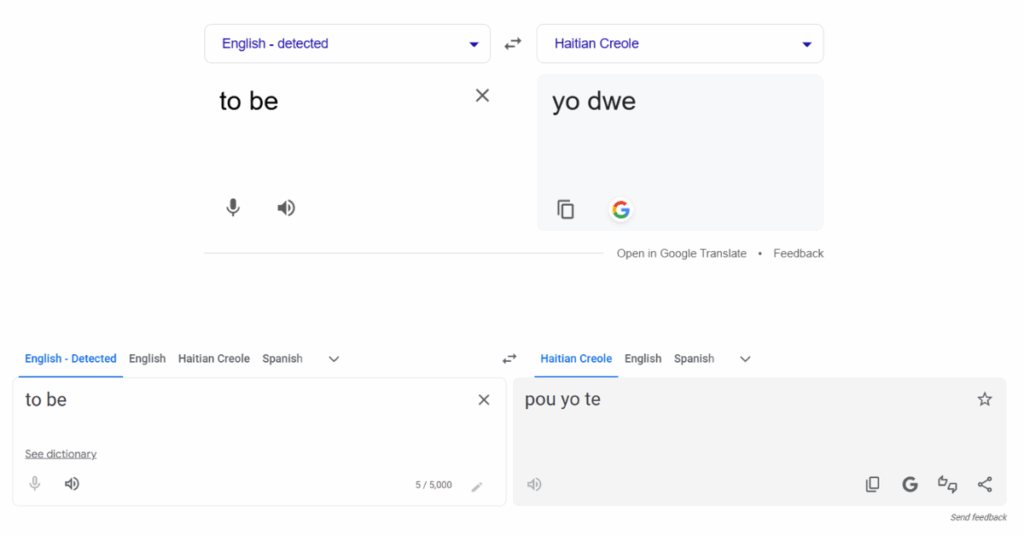
No, it’s not yo dwe or pou yo te, despite what Google Translate says, lol.
In Haitian Creole, the verb “to be” is translated as the word “se”. Yes, this means that “am”, “are”, and “is” all translate to “se”.
- I am a nurse. Mwen se yon enfimyè.
- I’m a nurse. Mwen se yon enfimyè.
- Yve is a nurse. Yve se yon enfimyè.
- Yve’s a friend. Yve se yon zanmi.
- We are friends. Nou se zanmi.
- We’re friends. Nou se zanmi.
When should you use "se" in Haitian Creole?
Let’s take a look at 11 rules to remember when using “se” in Haitian Creole. You’ll see how it works as the verb “to be”, how it’s used in questions, and how it can add emphasis. Each rule builds on the previous one.
using "se" as "to be"
- “To be” translates to “se” in Haitian Creole
- “Se” can be used before a singular noun in a statement, even without the article yon
- Don’t use “se” before adjectives or prepositions in the present tense
- Use “te” before adjectives and prepositions in the past tense
- “Se” can become “se te” in the past tense
to emphasize, contrast, clarify, or correct
- To emphasize the subject in a sentence, start with “se”, then add the subject, followed by “ki”, and add the rest of the sentence
- To emphasize the object in a sentence that already has “se”, move “se” and the object to the front, then add the subject after, and end with “ye”
- To emphasize the prepositional part of the sentence, begin with “se”, add the prepositional part, then the subject, and end with “ye”
- To emphasize a verb or adjective in a sentence, begin with “se”, repeat the verb or adjective, then say the original. Don’t repeat the tense marker and/or pronoun at the beginning
- To emphasize the end of a sentence, begin with “se”, add the emphasized part, then the rest of the sentence. Add a definite article at the end if needed
asking for information
- When asking for information, use “ye” at the end of the question instead of using “se” at all
How to Use "Se" in Haitian Creole
Now let’s look at example sentences—along with reminders and exceptions—for each of the 11 rules for using “se” in Haitian Creole. Click on a box below to see the examples for each rule.
1. "To be" translates to "se"
I am a nurse.
Mwen se yon enfimyè.
I’m a nurse.
Mwen se yon enfimyè.
Yve is a nurse.
Yve se yon enfimyè.
Yve’s a friend.
Yve se yon zanmi.
We are friends.
Nou se zanmi.
We’re friends.
Nou se zanmi.
2. "Se" can be used before a singular noun
Rule: “se” can be used before a singular noun in a statement, even without the article yon
However, if you’re not confident using yon, it’s best to avoid dropping articles for now—even though many Haitians do it naturally because they know how to apply it in the right context.
I’m a nurse.
Mwen se enfimyè.
She’s a teacher.
Li se pwofesè.
Yve is a driver.
Yve se chofè.
3. Don’t use "se" before adjectives or prepositions (present tense)
Rule: Don’t use “se” before adjectives or prepositions in the present tense—for example, when talking about days, times, or locations.
The photo is beautiful.
❌Incorrect: Foto a se bèl.
✅ Correct: Foto a bèl.
The car is clean.
❌Incorrect: Machin nan se pwòp.
✅ Correct: Machin nan pwòp.
It’s 5 o’clock.
❌Incorrect: Li se senkè.
✅ Correct: Li senkè.
We’re here.
❌Incorrect: Nou se la.
✅ Correct: Nou la.
The meeting is Sunday.
❌Incorrect: Reyinyon an se dimanch.
✅ Correct: Reyinyon an dimanch.
4. Use "te" before adjectives and prepositions (past tense)
Rule: Use “te” before adjectives and prepositions in the past tense.
Foto a te bèl.
The photo was beautiful.
The car was clean.
Machin nan te pwòp.
It was 5 o’clock.
Li te senkè.
We were here.
Nou te la.
The meeting was Sunday.
Reyinyon an te dimanch.
5. "Se" can become "se te" in the past tense
6. To emphasize the subject in a sentence
7. To emphasize the object in a sentence that already have "se"
8. To emphasize the preposition part of a sentence
9. To emphasize a verb or adjective
10. To emphasize the end of a sentence
11. When asking for information, use "ye" at the end of the question instead of using "se" at all
As you can see, Haitians love to emphasize different parts of a sentence.
But what about “Se te yon mesye ki rele Yve”? Isn’t there a rule that says you can’t use “se” and “te” together? Click below for the answer to that question—plus detailed explanations, examples, key sentences, and proverbs that illustrate this and other advanced rules.